


Table of Contents
- Why Thick-Coated Horses Need Specialized Grooming Tools
- Quick Comparison: Top 7 Horse Grooming Tools for Thick Coats
- 1. Shedding Blades: The Heavy-Duty Undercoat Remover
- 2. Curry Combs: Dislodging Mud and Loose Hair
- 3. Dandy Brushes: Breaking Up Matted Sections
- 4. Body Brushes and Finishing Brushes: Polish and Shine
- How to Groom a Horse for Winter: Timing and Technique
- Maintenance and Sanitization of Your Grooming Kit
- Frequently Asked Questions
Last Updated: October 4, 2026
Why Thick-Coated Horses Need Specialized Grooming Tools
Horses with thick coats face unique grooming challenges that standard brushes simply cannot handle. A dense undercoat traps mud, dander, and loose hair, creating matting and poor circulation that leads to skin irritation and dull coat appearance. The 7 best horse grooming tools for thick coats are specifically engineered to penetrate deep layers, remove accumulated debris, and maintain coat health without causing discomfort or skin damage.
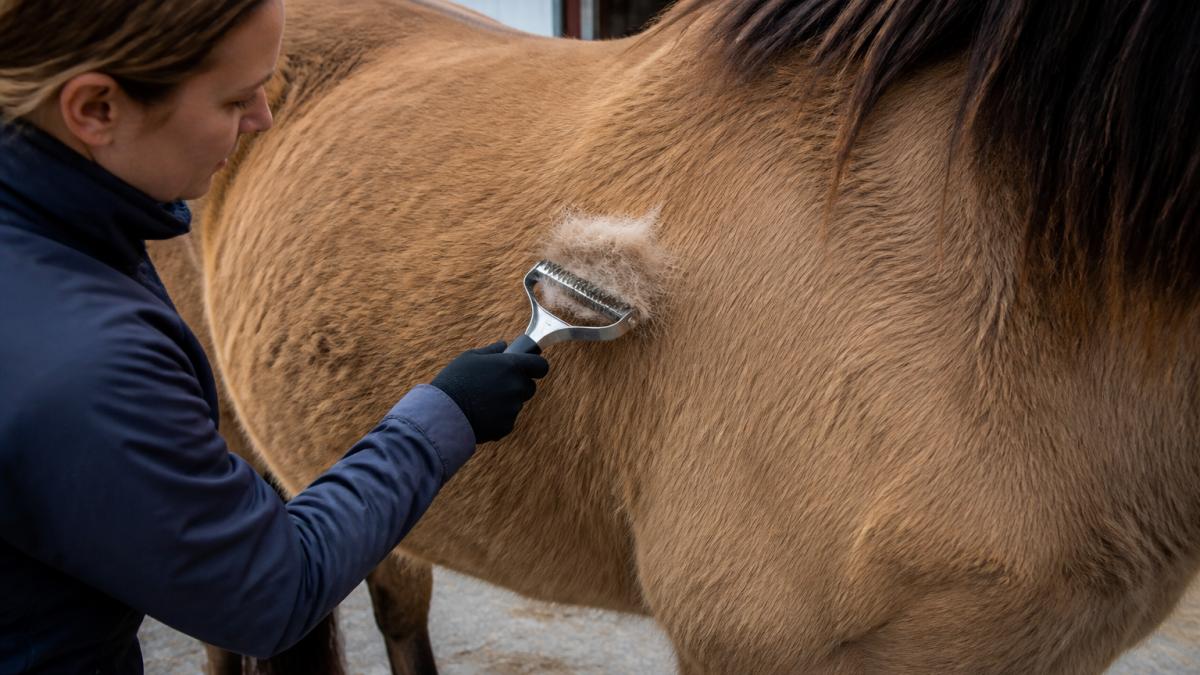
Thick coats demand specialized tools: shedding blades that cut through undercoat, curry combs that dislodge compacted mud and hair, and brushes with the right bristle stiffness to reach skin without pulling. Without proper tools, groomers spend twice as long on the job and risk irritating sensitive skin.
Maintaining a thick coat requires both knowledge and the right equipment. This guide covers the essential tools every thick-coated horse owner should have.
Quick Comparison: Top 7 Horse Grooming Tools for Thick Coats
| Tool Type | Primary Purpose | Best For | Key Benefit |
|---|---|---|---|
| Shedding Blade | Removing undercoat and loose hair | Spring shedding and deep cleaning | Cuts grooming time in half |
| Rubber Curry Comb | Dislodging mud and debris | Daily maintenance and pre-show prep | Gentle on sensitive skin |
| Dandy Brush | Breaking up matted sections | Thick, tangled coats | Stiff bristles reach deep layers |
| Body Brush | Polishing and finishing | Final coat shine | Soft bristles for sensitive areas |
| Finishing Brush | Creating shine and smoothness | Show preparation | Fine bristles for glossy appearance |
| Mane and Tail Comb | Detangling long hair | Daily maintenance | Prevents breakage and matting |
| Hoof Pick | Cleaning and inspection | Daily hoof care | Prevents thrush and infection |
1. Shedding Blades: The Heavy-Duty Undercoat Remover
A shedding blade is an essential tool for thick-coated horses. This tool features a thin, sharp blade with small teeth that slice through dense undercoat and remove loose hair without damaging the topcoat.

Unlike brushes that pull hair, a shedding blade uses a scraping motion that lifts loose undercoat away from the skin. Without a shedding blade, hair can stay trapped, creating knots and reducing air circulation.
When selecting a shedding blade, look for stainless steel construction and a comfortable handle. Apply moderate pressure in one direction, then flip the blade and work the opposite direction for even coverage.
2. Curry Combs: Dislodging Mud and Loose Hair
For thick-coated horses, rubber curry combs are a choice because they're gentler on skin while still dislodging compacted mud and debris.
A curry comb's circular motion stimulates skin circulation and brings natural oils to the surface, improving coat shine. Use circular motions across large muscle groups, digging just deep enough to loosen mud and loose hair without scraping skin. This tool is ideal for daily maintenance after turnout.
3. Dandy Brushes: Breaking Up Matted Sections
Dandy brushes feature stiff bristles that penetrate thick coats and break apart matted hair. Choose size and stiffness based on coat density: extremely thick coats need larger brushes with coarser bristles, while moderately thick coats do better with medium-stiffness bristles.
Synthetic bristles can be used for thick coats.
Apply firm pressure in the direction of hair growth using short, overlapping strokes. Pay special attention to areas prone to matting: behind the ears, along the neck, and under the mane.
4. Body Brushes and Finishing Brushes: Polish and Shine
Body brushes have soft bristles that remove remaining dust and loose hair after coarser tools, creating the final polish and maintaining natural coat shine.
A finishing brush has finer bristles designed for the face, legs, and sensitive areas. Use gentle pressure to stimulate natural oil production and create a glossy appearance.
For show preparation, use both tools in sequence: body brush first for larger areas, then finishing brush for final shine.
How to Groom a Horse for Winter: Timing and Technique
Winter grooming differs from summer grooming: the goal is to manage the dense undercoat while preserving the topcoat for insulation.
Understanding Winter Coat Structure
A thick winter coat has three layers: a coarse topcoat, dense insulating hair, and fine undercoat. Winter grooming removes excess undercoat and debris while preserving topcoat for warmth.
Timing and Environmental Conditions
Groom during the warmest part of the day when the coat is completely dry. Grooming wet or damp coats causes hair breakage and prevents tool penetration. Wait 4-6 hours after rain or snow before grooming to allow natural oils to redistribute.
Start grooming in early fall using a shedding blade and curry comb 2-3 times weekly to prevent matting. Once the full winter coat develops by November, shift to 1-2 sessions weekly.
Pressure Mapping for Winter Coats
Thick winter coats require significantly more pressure than summer grooming to penetrate the dense coat and reach trapped undercoat.
High-pressure zones: Barrel, ribcage, hindquarters, hip, neck, and shoulder accumulate the most undercoat and are prone to matting. Apply pressure with a shedding blade, curry comb, or dandy brush in the direction of hair growth.
Medium-pressure zones: Legs require pressure due to thinner skin. Face and ears require only light pressure with soft brushes.
High-friction zones: Under saddle/girth, under mane, between hind legs, and coronet band accumulate sweat and moisture. Groom these areas 2-3 times weekly with a curry comb or dandy brush to prevent matting, saddle sores, and fungal infections.
Tool Selection by Winter Coat Density
For extremely thick winter coats, use a shedding blade 2-3 times weekly, followed by a rubber curry comb and dandy brush with synthetic bristles. For moderately thick coats, a curry comb and dandy brush are usually sufficient, with shedding blade use as-needed during peak shedding.
Technique for Penetrating Thick Coats
When using a shedding blade on a winter coat, apply steady, controlled pressure and use longer strokes (12-18 inches) to cut through the dense undercoat. Work in one direction, then flip the blade and work the opposite direction for even coverage. The blade should make contact with the skin or near-skin layer, not just skim the topcoat. If you're not seeing loose hair being removed, increase pressure or check that your blade is sharp, a dull blade won't penetrate thick coats effectively.
With a curry comb, use firm circular motions (2-3 inch circles) and maintain consistent pressure throughout each stroke. Work systematically across large muscle groups, overlapping circles to ensure complete coverage. The comb's teeth should dig deep enough to loosen undercoat and debris without scraping skin. If the comb glides over the coat without resistance, you're not applying enough pressure.
With a dandy brush, use short, overlapping strokes (4-6 inches) and apply firm pressure to ensure bristles penetrate the thick topcoat. Work in the direction of hair growth, paying special attention to areas prone to matting. On a thick winter coat, a dandy brush should require noticeable effort to move through the coat, if it feels easy, you're not reaching the undercoat layers.
Frequency and Maintenance Schedule
Establish a consistent winter grooming schedule:
- September-October (coat transition): Groom 2-3 times weekly with a shedding blade and curry comb to manage the developing winter coat.
- November-February (full winter coat): Groom 1-2 times weekly, focusing on high-friction areas and undercoat maintenance.
- March-April (spring shedding): Increase to 2-3 times weekly as the horse sheds the winter coat, using a shedding blade aggressively to remove loose undercoat.
Consistency matters. Regular grooming allows you to catch skin issues early.
Maintenance and Sanitization of Your Grooming Kit
Grooming tools accumulate hair, sweat, and debris that harbor bacteria and fungi. Regular sanitization prevents skin infections and keeps your tools performing at their best. After each grooming session, remove hair from brushes and combs using an old toothbrush or dedicated brush cleaner, working the bristles thoroughly to dislodge trapped hair.
Weekly deep cleaning involves soaking tools in warm water with mild dish soap for 10-15 minutes, then scrubbing bristles with a brush and rinsing thoroughly. For metal tools like shedding blades and curry combs, dry them immediately after washing to prevent rust. Store tools in a clean, dry location away from direct sunlight, which can degrade bristles and handles over time.
Many groomers keep their tools in a grooming tote with compartments for each tool. This organization system prevents cross-contamination between horses and makes it easy to maintain your kit. A grooming tote also protects tools from damage and keeps everything accessible during grooming sessions.
Inspect your tools regularly for damage. A bent shedding blade doesn't work effectively and can scratch skin. Bristles that are worn, matted, or falling out should signal that replacement is needed. Investing in quality tools from the start means they last longer and maintain performance, ultimately saving money compared to constantly replacing cheap alternatives.
At SCARAMUS, we stock grooming supplies built for durability. Our Curved Pet Slicker Brush at $32.99 features stainless-steel pins that maintain their softness and firmness over years of use, backed by a 30-day satisfaction guarantee and lifetime durability warranty. For horses requiring undercoat removal, quality brushes designed for thick coats can assist with maintenance.
Grooming a thick-coated horse requires the right tools and technique. The shedding blade removes undercoat efficiently, curry combs maintain daily cleanliness, and body brushes create the final shine. SCARAMUS provides quality grooming supplies designed to make your grooming routine faster and more comfortable for both you and your horse. Start with the essentials, a shedding blade, curry comb, and dandy brush, then add specialized tools as your grooming skills develop. Your horse's coat health and your own comfort depend on choosing tools that work with your horse's specific coat type rather than against it.
Frequently Asked Questions
What is the best tool for removing thick winter horse hair?
A shedding blade is the most effective tool for removing thick winter coats. It cuts through dense undercoat and loose hair without damaging the topcoat. For horses with very thick coats, start with a shedding blade, follow with a curry comb to dislodge remaining debris, then use a dandy brush to break up matted sections. This three-step approach removes the maximum amount of dead hair and dander while keeping the horse comfortable.
How often should you groom a horse with a thick coat?
Regular grooming can help manage thick-coated horses, especially during spring shedding and winter coat transitions. During heavy shedding seasons, you may need to groom every other day to manage the volume of loose hair. Regular grooming also improves circulation and allows you to spot skin issues early.
Are rubber curry combs effective for thick-coated horses?
Yes, rubber curry combs are highly effective for thick coats. They dislodge mud, sweat, and loose hair without the harshness of metal curry combs. Rubber curry combs work especially well on sensitive skin and after bathing. Use circular motions to massage the coat and stimulate blood flow. They're gentler than metal options but still powerful enough to handle dense undercoats when used with proper pressure.
Can you over-groom a horse's coat?
Avoid using stiff-bristled brushes excessively or applying too much pressure with shedding blades. Pay attention to your horse's comfort; if the skin appears red or irritated, reduce grooming intensity and frequency.